

In recent years, E. coli outbreaks in southwest Ohio have hospitalized half a dozen individuals and contributed to numerous recorded fatalities around the United States. As summertime festivities approach, Clermont County Public Health reminds local food vendors about the importance of licensing their businesses for food-safe distribution.
Widespread, foodborne illnesses impact one in six people in the southwest Ohio region every year. The most common culprits in Clermont County are E. coli, Clostridium perfringens, and Salmonella, which are harmful bacteria that can contaminate raw and improperly handled food products. While licensed restaurants can become the source of these outbreaks, unlicensed small businesses and food vendors pose a serious risk to community health and are difficult to monitor without local support.
 Max Ginsburg "Hot Dog Stand Crowd"
Spokesmen for Clermont County Public Health remind anyone who prepares or sells food to the public to obtain a food-handling and safety license from their local health department.
Ohio law requires this food safety standard and extends it to vendors who participate in events that charge entrance fees or accept donations.
Clermont County Public Health protects residents in 25 incorporated or designated areas through routine food and vendor license inspections. These reviews ensure that each seller’s food is safe to eat, prepared, and stored in a sanitary manner. As organizations prepare for busy summertime festivals and events, business owners should expect public health officials to be on call for potential violations.
Getting a temporary food license approved in Clermont County requires a few steps. However, vendors and individuals must submit their applications, complete with a menu, booth layout, and fee, at least 10 business days prior to the first day of their event.
Temporary licenses are valid for a maximum of five consecutive days at a single, specified location in accordance with Ohio law.
 Source: GoFoodService
Under Section 3717.43 of the Ohio Revised Code, any person or government entity selling food to the public at a temporary event for five consecutive days or less must obtain a Temporary Food Service Operation (FSO) or Retail Food Establishment (RFE) license from the health department.
The Clermont County General Health District, headed by Health Commissioner Julianne Nesbit, is the health department responsible for food safety in Clermont County. These officials have decades of combined experience shielding the community against bacteria and virus outbreaks before they have a chance to develop.
Commercial vendors, brick-and-mortar restaurants, and non-profits / charities must comply with state regulations, or they will be at risk for costly penalties, personal injury lawsuits from customers, or additional legal consequences depending on the severity of the violation or community impact.
Exemptions apply to individuals who give away free food, prepackaged (non-refrigerated) drinks, and non-hazardous home-baked goods such as bread or cookies.
Furthermore, many food truck drivers who already own a valid Ohio Mobile food license typically do not need an additional temporary license.
 Source: Discover Clermont
An Ohio Sales Tax Vendors License (also known as a seller's permit) is a legally required registration that authorizes a food vendor to engage in retail sales and collect state and local sales taxes on applicable products and services.
Vendors can submit an application online or via mail through the Clermont County Auditor. The state application fee for a new vendor's license is $50.
Ownership of this permit allows businesses to legally collect state and local sales tax from their buyers and remit it to the appropriate state agency.
Displayed permits also establish credibility with customers, partnered vendors, and suppliers, which is often necessary for financing or partnerships.
 Source: Finger Lakes Daily News
Vendors should obtain a license according to the type of service they provide.
Permanent facilities, like restaurants or food trucks, must undergo a plan review process before opening. Food vendors can download the Food Plan Review Application and the standard Food License Application from the Clermont County Public Health website.
Individuals who operate a mobile trailer or cart (which may differ from a food truck) use the Mobile Food Unit Application.
Those operating at a short-term fair or festival, common in Clermont County, should submit a Temporary Food Service Application and fee at least 10 business days before the event.
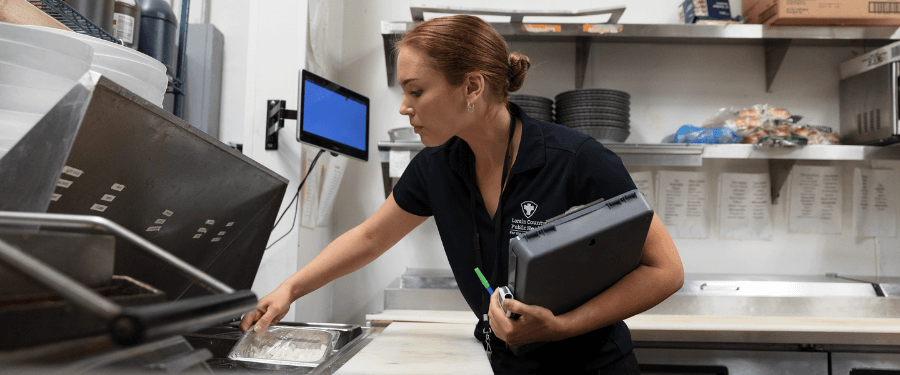 Source: Lorain County Public Health
Clermont County Public Health may require certain vendors to undergo inspections of their facilities and food storage locations to maintain their licenses. In some cases, additional training and certifications may be necessary to obtain permits, depending on the vendor and event.
For specific questions about the application process and requirements, food vendors should contact the Clermont County Public Health Environmental Health Division
at (513) 732-7499.
While these regulations and applications may feel like a hassle to some vendors, following protocols and obtaining a proper temporary permit can yield positive rewards for their businesses.
These event licenses demonstrate to customers that the seller has legally inspected and approved safe food for distribution, minimizing the risk of widespread foodborne illness and death in Clermont County. Safety measures like handwashing stations, properly temperature-controlled storage units, and pest-free kitchens improve food quality and customer trust, which can drive more business to the vendor.
Business owners and individuals who violate these measures may suffer reputation loss and financially ruinous kitchen closures.
To learn more about temporary permits and application fees, visit ClermontHealthOhio.gov. Protecting the community against unsanitary food measures is a top priority for the organization. These stewards of public health ensure the general well-being of Clermont County residents and reduce harm that can affect children, large crowds, and at-risk individuals.
Subscribe to Connect Clermont for more Good News and public health tips.



Comments
No comments on this item Please log in to comment by clicking here