

BETHEL & TATE TOWNSHIP — Federal agricultural officials are lifting portions of the Asian Longhorned Beetle quarantine in Clermont County, opening the door for a community effort to replant the local canopy this month. Volunteers will be eligible for a free tree giveaway in recognition of their conservation work.
 Source: Ohio Department of Agriculture
ALB is an invasive, wood-boring insect native to eastern Asia that attacks and kills hardwood trees. Researchers believe that ALB arrived in North America during the 1990s, burrowing into untreated wood materials like pallets and crates. Today, infested firewood is the primary carrier of these pests across state lines.
The discovery of ALB in Clermont County resulted in a 2011 executive order by the Ohio governor to quarantine the county. Various municipal and federal orders reinforced subsequent eradication efforts. During those early years, the quarantine zone peaked at 44 square miles of Clermont, including portions of Tate Township, East Fork State Park, and East Fork Wildlife Area.
 ALB quarantine zone as of 8/10/2026.
This August, the Ohio Department of Agriculture and USDA announced it would lift a sizable portion of the ALB quarantine area in Clermont County, marking optimistic progress in Ohio’s war against the invasive species. The quarantine will now cover only 37.8 square miles of the county.
“ODA and USDA have worked tirelessly to fight this destructive pest,” ODA Director Brian Baldridge said in a recent event for the ALB Eradication Program. “Releasing another section of the quarantine zone is a clear sign that our collective efforts are paying off. We remain committed to protecting Ohio’s forests, communities, and industries from the long-term damage ALB can cause.”
Despite Clermont’s effectiveness in combating ALB, the insect has caused significant damage to the local ecology over the years. Foresters have removed 118,306 infested trees in the area to prevent the spread of the beetle. ALB continues to pose a serious threat to the state's $5 billion tree nursing industry.
 East Fork Wildlife Reserve. Source: Ohio Department of Natural Resources.
USDA-APHIS and OKI Trees for Me partnered together to schedule a Free Tree Giveaway for residents willing to help repair the destroyed canopy in Bethel and Tate Township.
The reforestation initiative will take place throughout the season.
Willow Oak
Eastern Redbud
Persimmon
Pecan
Black Gum
Bald Cypress
Flowering Dogwood.
Residents can reserve trees while supplies last by visiting www.oki.org/tree-for-me/ and clicking on Active Tree Distributions.
Participants should pick up their trees on Friday, September 25, between 8 a.m. and 4 p.m., or Saturday, September 26, between 9 a.m. and 1 p.m.
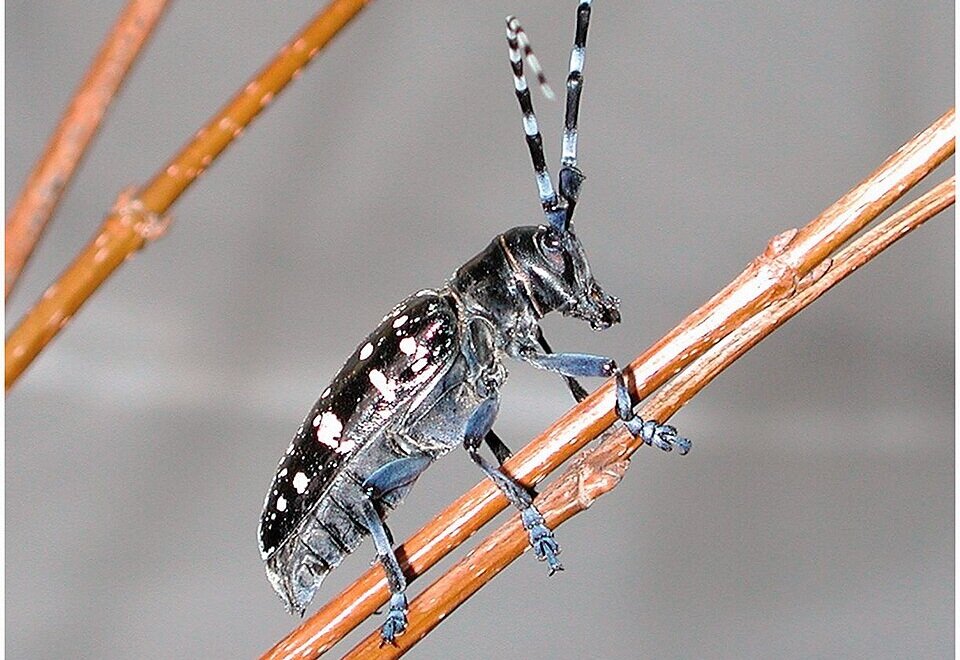
Ongoing efforts to reduce the ALB population require support from residents of Bethel and Tate Township, though anyone across Clermont County can help.
Locals should keep an eye out for ALB and the signs of ALB damage during walks through East Fork State Park, the East Fork Wildlife Area, or other wooded parks across the county.
Vigilant hikers can recognize this insect by its distinct appearance:
Possible signs of infestation include small, round exit holes in trunks or branches, typically dime-sized, which are commonly mistaken for termite activity. ALB also leaves evidence of its burrows with shallow oval or round egg-site scars within the wood. Some residents may notice coarse sawdust-like wood shavings on branches or at the base of trees.
It’s important for locals to understand that ALB will not harm humans or their pets, despite their large, sometimes scary-looking appearance. The beetle typically will not try to bite humans unless it is being attacked, nor does it feed on blood like ticks or other parasites. ALB is a non-venomous insect.
 Source: University of Illinois
Locals who find ALB outside the quarantine zone should take high-quality photos of the insect and report it immediately online or call the toll-free USDA APHIS ALB Hotline at 1-866-702-9938.
Residents remain respectful of the quarantine regulations, meant to protect the community from unnecessary environmental destruction. They should not move wood from areas where ALB is observable or active.
Read more about how Clermont County protects its local ecology.



Comments
No comments on this item Please log in to comment by clicking here